For most coring and scanning teams, the value of Digital Concrete X-Ray isn't hard to see. Faster decisions. Greater clarity. Fewer risks on congested slabs. Combined with GPR, it gives crews the strongest possible foundation for concrete scanning work.
If you want to see how the field workflow looks in practice, read our guide to Digital Concrete X-Ray on-site workflow.
The harder part is explaining it to the client - in a way that sounds fair, simple, and worth the additional cost.
GPR is already familiar. It's already accepted. On many jobs, it's already expected. Digital Concrete X-Ray is different. It's newer to the market, it costs more per targeted shot, and if it's introduced the wrong way, clients can immediately jump to the old mental image: radioactive sources, overnight shutdowns, cleared floors, and premium overtime.
That picture isn't wrong for the old technology. It just doesn't describe what a digital concrete x-ray machine actually is today.
So let's be direct about it. Here are the five most common objections scanning and coring companies hear when they bring up Digital Concrete X-Ray on a job - and a practical, field-tested way to respond to each one.
The 5 Objections You'll Hear Most
"It's expensive. We don't have room for that in the budget."
"GPR is fine. It's faster, cheaper, and we already know how to use it."
"X-ray means radiation. That's nights, shutdowns, and double time - we can't deal with that."
"The setup is more complicated. You need access to both sides of the slab."
"The budget is already approved. Why are you telling us this now?"
Let's take them one at a time.
1. "It's expensive. We don't have room for that in the budget."
This is usually the first objection, and on its face, it's fair. A targeted Digital Concrete X-Ray shot can run one-and-a-half to two times the cost of a standard GPR check, sometimes more. That comparison looks obvious on a line item.
But it's usually the wrong comparison.
The real question isn't which scan costs less. The real question is: what does it cost if the drilling decision on this location is wrong?
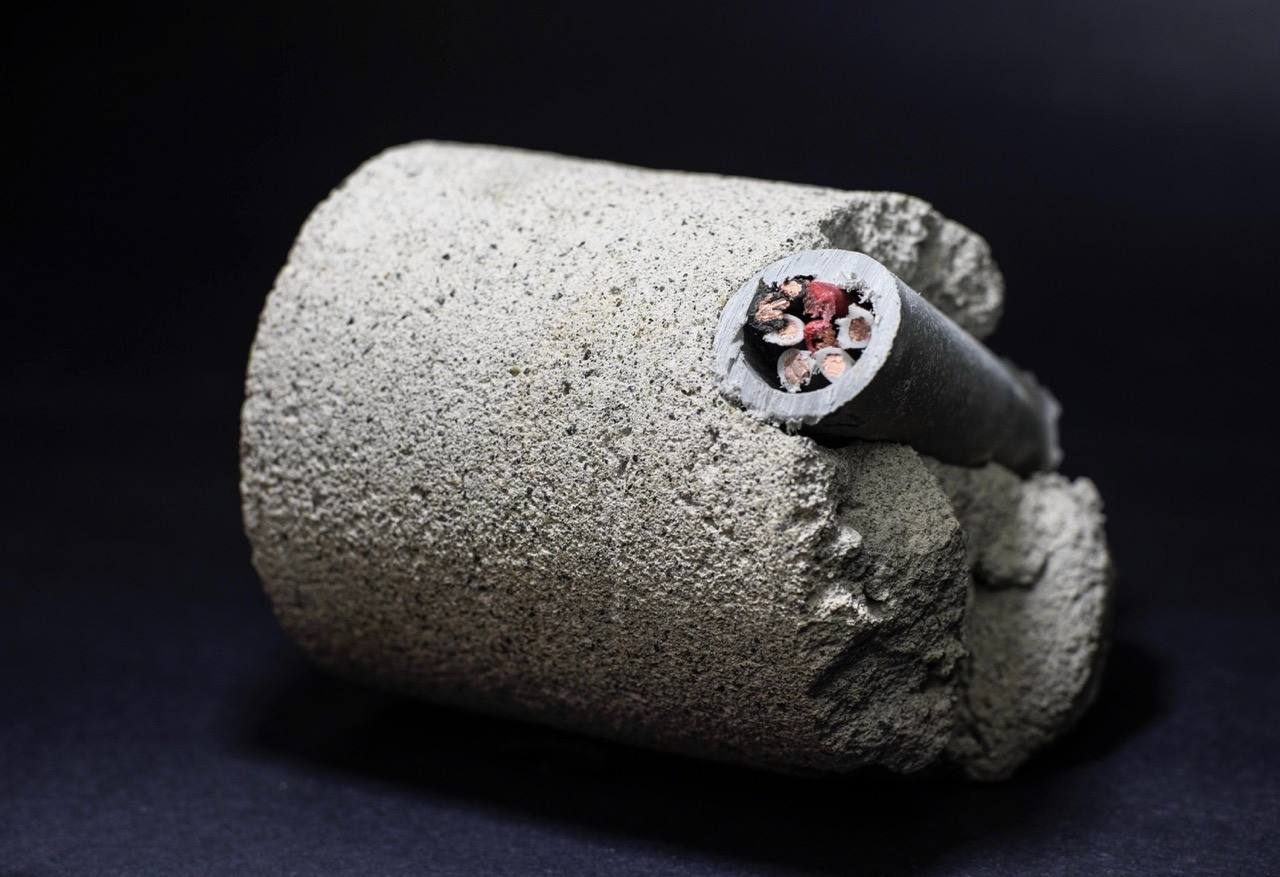
On a congested slab, a GPR technician can spend 20 to 30 minutes - or more - on a single difficult location, checking and rechecking, and still leave with an uncertain answer. The client pays for that time, and the risk is still there. A digital concrete x-ray scanner doesn't offer broad coverage, but that's not the point. The point is getting a definitive answer on the exact coring location that matters.
Here's a scenario that makes the cost picture clearer: a crew spends half an hour on a busy location with standard scanning and still can't give a clean answer. They go back to the client, say they can't core there because something might be in the way. The layout gets revised. The structural engineer weighs in. The architect or landlord gets looped in. Everything slows down. Or worse - the client accepts the risk anyway, the core goes in, something gets hit, and the project absorbs the cost of repair, delay, and coordination on top of the original scan time.
At that point, the "more expensive" method stops looking expensive. The simplest way to explain it:
The shot costs more than a basic scan. But on a location like this, the real cost isn't the scan - it's getting the drilling decision wrong.
If you want to make the math concrete, try a side-by-side comparison: one GPR operator spending 30 minutes on a congested location versus an x-ray crew resolving the same decision in roughly 15 minutes with two people. The labor picture isn't far apart. The difference is that one method still leaves room for interpretation. The other doesn't.
2. "GPR is fine. It's faster, cheaper, and we already know how to use it."
This objection isn't wrong - and the right response isn't to argue with it.
GPR is faster to deploy. It's easier to carry. It's the standard everyday tool, and it performs well in the right conditions. Nobody should frame GPR as the problem here.
The issue isn't that GPR is bad. The issue is that speed at deployment isn't the same as speed to a confident answer - especially on a congested suspended slab with dense reinforcement, conduit, post-tension, embedded utilities, and tight core locations. That speed advantage can disappear fast. The crew arrives quickly, then spends too much time working through one hard spot while still carrying the risk of missing something critical.
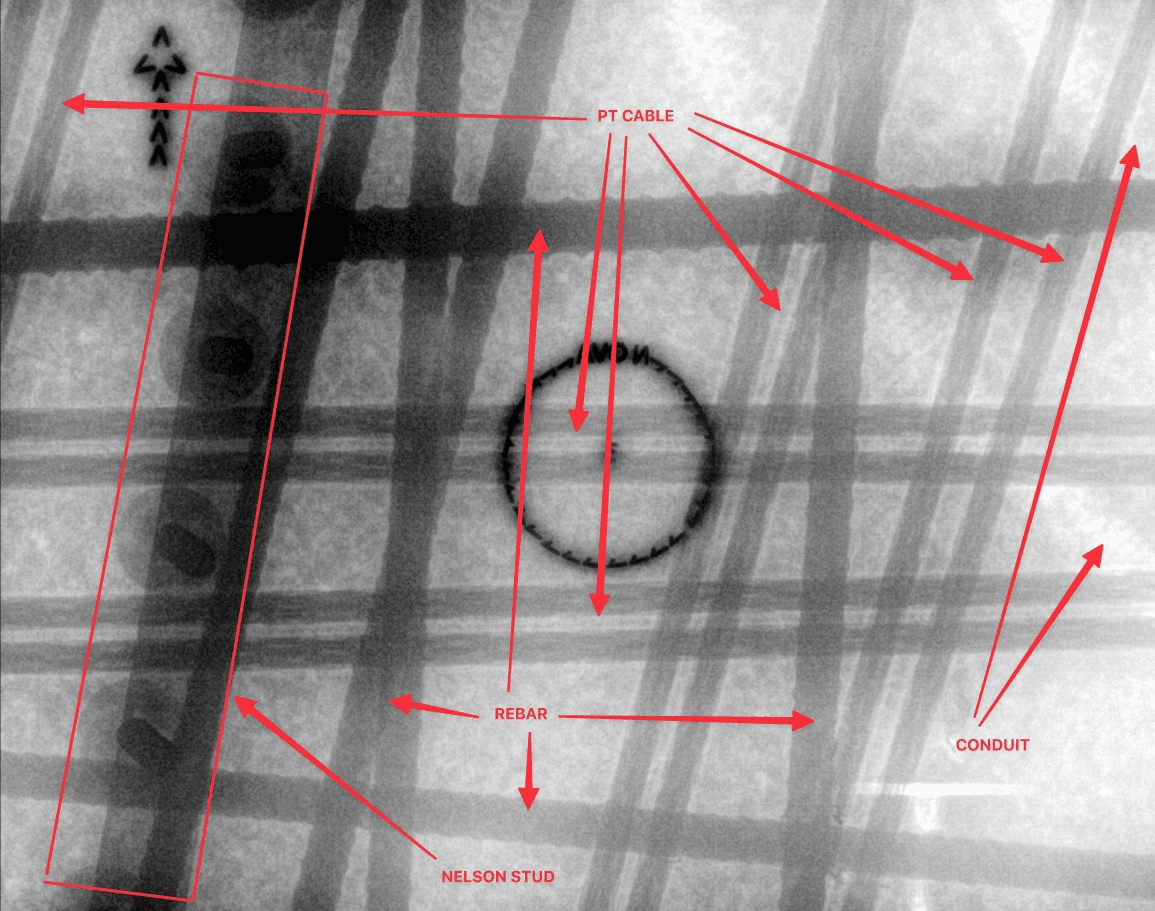
And it's worth being clear about the traditional alternative too: for years, x-ray on an active construction site meant radioactive material, strict regulations, after-hours scheduling, and a complicated process that rarely made sense for just a few spots. Digital Concrete X-Ray changes that. It's a different tool, built for field use - the portability of GPR, with the accuracy of an actual image. A good way to put it:
GPR is still the fastest everyday tool. A digital concrete x-ray device is what you reach for when the slab is too busy for GPR alone - a 30-to-180-second shot, and the guesswork is gone.
One real-world example of how this lands: a scanning company introduced digital concrete x-ray as a second-method option on harder locations, not as a GPR replacement. After a few jobs, the GC started requesting x-ray specifically on congested areas - because they'd seen firsthand that "faster to scan" doesn't always mean "faster to decide." The market figured it out once it saw the workflow in the field.
That's the right framing for this conversation: you're not replacing the standard method everywhere. You're reaching for a stronger one when the standard option stops being the lowest-risk choice.
3. "X-Ray means radiation. That's nights, shutdowns, and double time."
This objection comes from a picture people have already built in their heads - and it's understandable.
When most people in construction hear "x-ray," they think of traditional industrial radiography: sealed radioactive sources, cleared floors, all-night work, and major logistical disruption. That's exactly what they're reacting to.
The first step is to separate digital concrete x-ray equipment from that older process - and to be upfront about radiation rather than defensive about it.
Yes, radiation is involved. But the comparison matters: this is an electrically generated x-ray system. Radiation is produced only when the tube is energized - power on, shot taken, power off. Thirty to 180 seconds, with a 15-foot exclusion zone on the working side and 50 feet on the underside of the slab. That's the exposure window. Work can continue during regular site hours with basic coordination. No overnight shutdown, no building evacuation.
That's a fundamental difference from a traditional radioactive source, which remains active by nature whether it's in use or not - which is exactly why source-based radiography carries such a heavy regulatory and logistical footprint. Learn more in our articles about why Digital Concrete X-Ray is not traditional X-ray, and about the U.S. compliance basics a scanning company needs to run an X-ray service. The clearest way to say it:
This isn't the old radiography process. Think of how a dental x-ray works - electrically generated, brief, and off the moment the shot is done. A concrete x-ray machine operates on the same basic principle.
When clients understand that the disruption is a short, manageable exclusion zone rather than an all-night production, the objection usually loses most of its weight.
4. "The setup is more complicated. You need access to both sides of the slab."
This one sounds reasonable - until you think through what a coring job actually requires.
The question during a scan isn't only what's inside the slab. The question is whether the complete path works for the core. That includes understanding what's happening on the underside: ductwork, piping, access constraints, headroom. A location may look acceptable from the top and be completely unusable from below. If a ventilation duct runs five inches from the ceiling directly below the intended core path, the location doesn't work - and learning that before drilling is worth a lot more than learning it after.
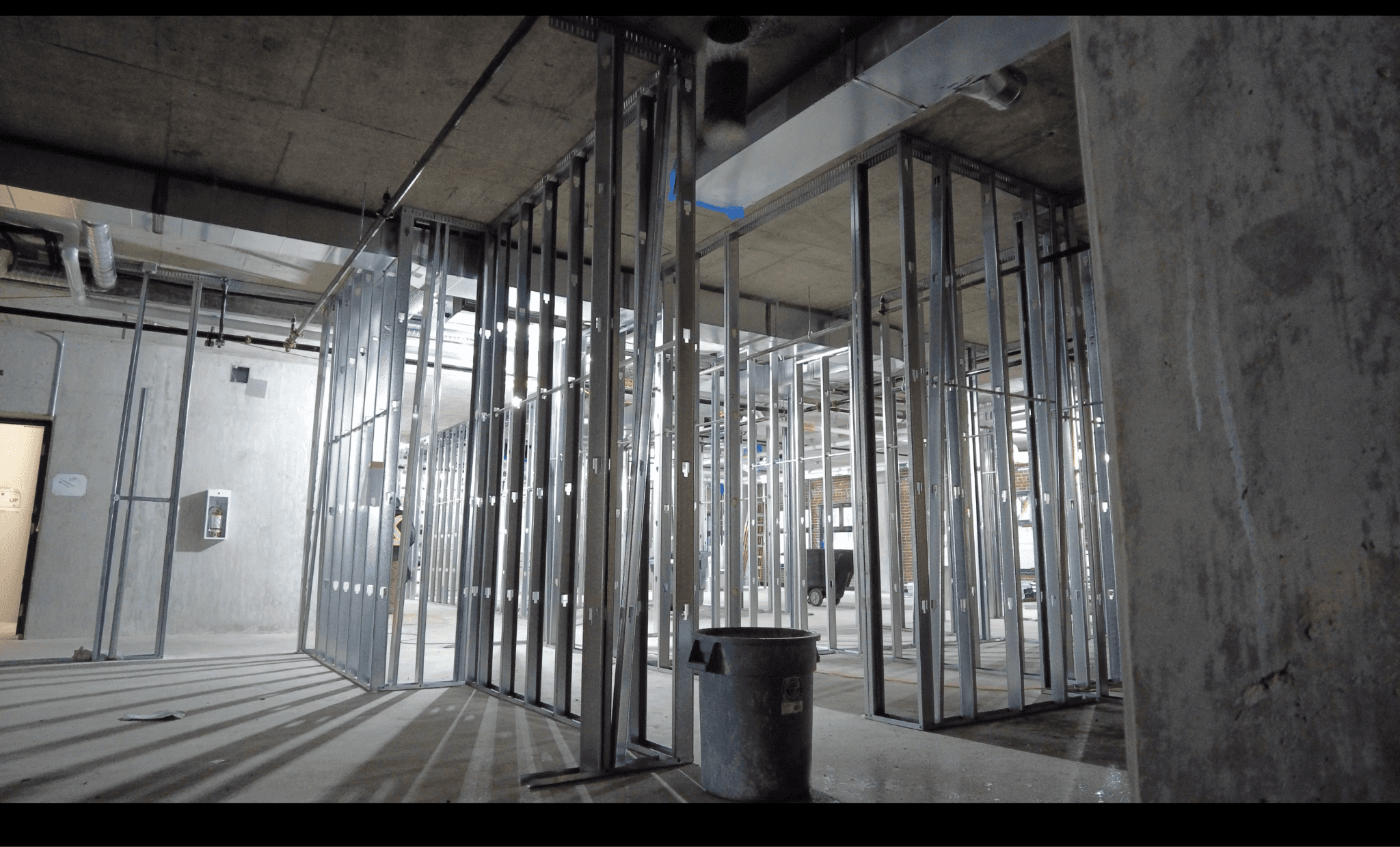
When you frame it that way, two-sided access isn't extra complexity. It's part of doing the coring decision correctly. The practical way to put it:
It's a coring job. Both sides matter anyway. The x-ray confirms the full path before anyone commits to the hole. What does it cost to bring scanning back, get fresh sign-off from the structural engineer, and reschedule the coring crew - just because a couple of spots didn't work on drilling day?
That's not a hypothetical. It's a standard consequence of an incomplete scan on a congested slab.
That said, be straight with clients: not every job needs x-ray. On a straightforward slab with clean GPR readings, standard scanning is the right tool. A concrete x-ray scanner makes the most sense when the path is critical enough - or the cost of a wrong decision is high enough - that a stronger answer is worth the setup.
5. "The budget is already approved. Why are you telling us this now?"
This objection comes up when a job starts under a standard scanning assumption and the slab turns out to be more complicated than expected. The GC pushes back: why is the scope changing mid-job?
The most important point here is a simple one: a recommendation for digital concrete x-ray should never come as a surprise add-on. It should come because site conditions showed it was actually needed.
The right answer isn't defensive - it's honest:
"We didn't start this job planning to switch methods. We ran the standard scan. When we got to these locations and saw what's in this slab, staying with GPR here carries more risk than the cost of changing methods. We're not asking for more money because we want to - we're recommending this because this specific condition got more expensive to get wrong."
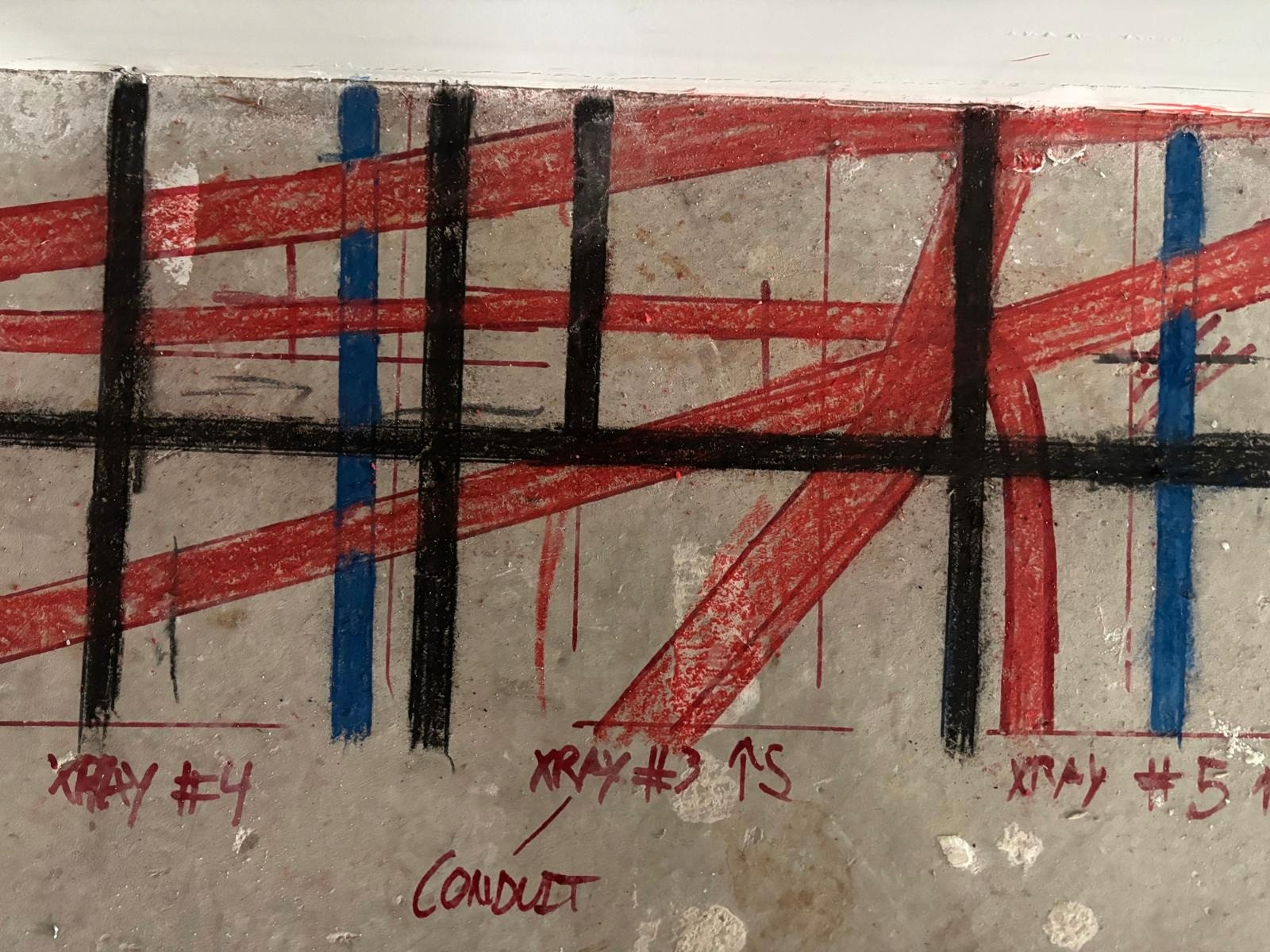
That works because it's accurate. A crew that starts with GPR, works through the normal process, and identifies two or three locations where the risk is too high to proceed without better imaging isn't upselling. They're doing their job. The recommendation comes from the slab, not from a sales conversation.
That only works when the workflow is tight in the field, which is why we also put together this step-by-step guide to Digital Concrete X-Ray on-site workflow.
And that distinction - between a reflexive add-on and a condition-driven upgrade - is usually what removes the tension. Clients can hear the difference.
What These Objections Are Really About
Most of the time, the resistance isn't about the technology itself.
It's about cost, unfamiliarity, workflow disruption, and a vague concern that something unnecessary is being added to a job that was already budgeted and scoped. That's actually good news - because all of those things can be addressed clearly once you stop presenting digital concrete x-ray equipment like it's a strange new device and start presenting it like a practical answer to a difficult location.
GCs and owners already understand bad core hits, rework delays, redesign loops, and congested slabs. They don't need a product pitch. They need one clear connection made: this method costs more on the scan line. On the wrong location, it costs less than the mistake.
Quick Recap
Use GPR where GPR is the right tool - and most of the time, it is.
Use digital concrete x-ray where the slab is congested, the path is too critical to leave uncertain, or the cost of a wrong drilling decision exceeds the cost of a better answer.
Don't try to sell x-ray as a concept. Explain it as the stronger option for the specific locations where standard scanning stops being worth the risk.
That's what makes it easier to justify. And that's what helps clients understand they're not looking at another line item - they're looking at a cheaper alternative to a much more expensive mistake
We share more tips in our case article about how Nova uses Radii-x, and why a top scanning company relies on us for concrete inspections in Canada.
See How It Works in the Field
Digital Concrete X-Ray doesn't require a hard sell. It requires the right situation, the right explanation, and the right workflow.
If you want to see how it fits into a real scanning and coring operation - and how to present it to clients in language that feels practical rather than technical - book a demo with us.
We'll walk you through the field workflow and show you exactly how to position it on the jobs where it matters most.
People also search for terms like concrete xray scanner, concrete x-ray machine, concrete xray machine, rebar xray machine, concrete x ray machine price, concrete x-ray device, floor x ray machine, digital concrete x-ray, concrete x ray equipment for sale, concrete x-ray equipment, x ray machine construction, x ray concrete scanner, floor x ray equipment, and building x ray machine